Many South Africans assume disability insurance is only for people who do physically dangerous work miners, construction workers, truck drivers, factory workers, or people who spend their day on the road. So, if you work in an office, use a laptop, attend meetings, send emails, and spend most of your day behind a desk, it is natural to ask: “Do I really need disability insurance?” The answer is yes because disability insurance is not only about losing the use of your legs, arms, or physical strength. It is about protecting your ability to earn an income if illness or injury prevents you from doing your job properly.
Your Income Is Still Your Biggest Asset
Even in an office job, your lifestyle depends on your income. Your salary pays for your rent or bond, transport, groceries, school fees, medical aid, insurance premiums, debt repayments, investments, and support for loved ones. If that income stopped for six months, one year, or permanently, the financial pressure could become serious very quickly.
The biggest mistake many office workers make is thinking, “My job is not risky.” But the real question is not only whether your job is risky, it is whether your income is at risk if your health changes. A person earning R35,000 per month could earn millions of rand over the rest of their working life. That future income is an asset worth protecting.
Office Workers Can Still Become Disabled
An office job may carry less physical risk than a manual labour job, but it does not make you immune to disability. Conditions such as cancer, stroke, heart disease, severe back problems, mental health conditions, autoimmune diseases, neurological disorders, vision problems, and complications after surgery can all affect your ability to work.
For many office workers, the ability to earn depends on concentration, memory, eyesight, mobility, communication, emotional resilience, and mental stamina. If any of these are affected, your work performance and income may suffer. You may not need to lift heavy objects to be financially disabled — you only need to be unable to perform the key duties that generate your income.
Disability Is Not Always Permanent
Another misconception is that disability insurance only pays when someone is permanently disabled. Depending on the type of cover, disability benefits can assist when you are temporarily or permanently unable to work. This is especially important for office employees who may suffer from an illness or injury that requires months of recovery.
For example, if you undergo major surgery and cannot work for several months, your employer’s sick leave may not be enough. Once paid sick leave is exhausted, your income could reduce or stop. Income protection can help replace part of your monthly income during a valid claim period, giving you time to recover without destroying your financial stability.
Employer Benefits May Not Be Enough
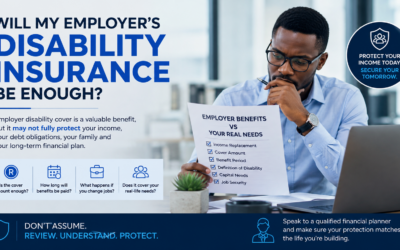
Some office workers believe they are fully covered because their employer provides group risk benefits. Employer benefits are valuable, but they may not always be enough. The cover amount may be limited, the definition of disability may be strict, and the benefit may not fully match your personal financial responsibilities.
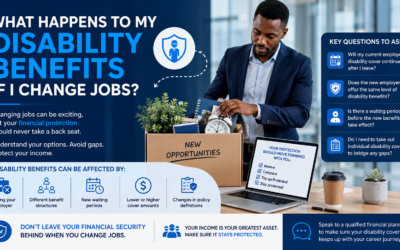
Also, employer-provided cover usually depends on your employment. If you change jobs, become self-employed, are retrenched, or move to an employer with weaker benefits, your protection may change. Having personal disability insurance can give you more control and continuity.
This does not mean you should ignore employer benefits. Instead, you should review them properly and understand where the gaps are. A financial planner can help you compare your employer cover with your personal needs.
Income Protection vs Lump-Sum Disability Cover
There are two broad types of disability cover that office workers should understand: income protection and lump-sum disability cover.
Income protection is designed to replace a portion of your monthly income if you cannot work due to illness or injury. This can help with ongoing expenses like rent, bond payments, groceries, school fees, debit orders, and household costs.
Lump-sum disability cover pays a once-off amount if you meet the policy definition for a qualifying disability. This can help with capital needs such as settling debt, adapting your home, paying for rehabilitation, covering medical shortfalls, or creating a financial buffer.
The best solution may be one or a combination of both, depending on your income, debt, dependants, savings, employer benefits, and affordability.
Capital Needs Still Matter in an Office Job
Even if you work from a desk, disability can create once-off financial needs. You may need private medical treatment, rehabilitation, assistive technology, home modifications, transport changes, or additional support at home. You may also need to reduce debt quickly if your long-term earning potential changes.
This is where lump-sum disability cover becomes important. A once-off payout can give you flexibility when life changes unexpectedly. It can help you restructure your finances instead of relying only on monthly income replacement.
Premium Payable: Is It Worth the Cost?
The premium payable for disability insurance depends on factors such as your age, income, occupation, health, smoking status, benefit amount, waiting period, and type of cover. Office workers may sometimes qualify for more favourable premiums than people in high-risk physical occupations because their occupational risk may be lower.
However, cheaper does not always mean better. A lower premium may come with stricter definitions, longer waiting periods, exclusions, or limited benefits. The right policy should not be chosen only by price. It should be chosen based on whether it will realistically protect your income when you need it most.
Affordability is still important. A policy only works if you can maintain the premium over time. The goal is to find a balance between strong protection and a premium that fits comfortably into your monthly budget.
The Real Question: Can You Afford Not to Have It?
If you have no debt, no dependants, strong savings, multiple income streams, and enough investments to support yourself if you cannot work, you may need less disability insurance. But if your lifestyle depends on your monthly salary, disability cover should form part of your financial plan.
For many South African professionals, an office job creates a false sense of security. The risk may not be heavy machinery or dangerous worksites, but the financial risk remains: if you cannot work, your income may stop.
Final Thoughts
So, do you really need disability insurance with an office job? Yes, if your income matters to your lifestyle, your family, and your future goals. Disability insurance is not about the type of chair you sit on or whether your job is physically demanding. It is about protecting the income that supports your life.
Before deciding that you do not need cover, ask yourself: How long could I survive financially if my salary stopped tomorrow? If the answer makes you uncomfortable, it may be time to review your disability insurance with a qualified financial planner.
Your office job may feel safe, but your income is still worth protecting.