A critical illness can change your life in a moment. One day you are working, earning, providing, planning and building your future. The next day, a serious diagnosis such as cancer, heart attack, stroke, organ failure or another major medical condition can place your income, family responsibilities and long-term financial goals under pressure. In South Africa, where many households depend on one or two income earners, Critical Disease Insurance is not just a health-related benefit — it is a financial protection tool.
Your Ability to Earn an Income Is Your Greatest Asset
For most South Africans, the ability to earn an income is the foundation of financial stability. It pays for the bond or rent, school fees, groceries, transport, debt repayments, medical costs, family support and future savings. While people often insure their cars, phones and homes, many do not fully protect the one asset that funds everything else: their income-earning ability.
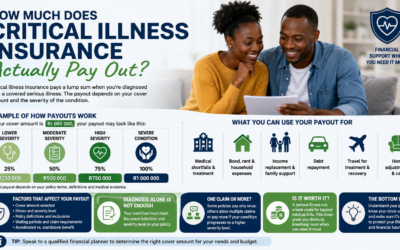
Critical Disease Insurance helps protect you when a serious illness disrupts your life. Unlike medical aid, which is designed to pay medical service providers for treatment-related costs, critical illness cover usually pays a lump sum directly to you when you meet the insurer’s claim criteria. This gives you flexibility to use the money where it is needed most.
Life Insurance: How to Protect Your Family Financially After Death?
The Loss of Ability to Earn Income
A critical disease does not always mean permanent disability, but it can still affect your ability to work. Treatment, recovery time, fatigue, emotional stress, physical limitations and regular medical appointments can reduce your capacity to earn an income. For business owners, self-employed professionals, commission earners and employees without strong sick-leave benefits, this can become financially devastating.
Imagine being diagnosed with a serious illness and needing several months away from work. Your medical aid may cover certain hospital or treatment costs, but who pays the home loan, vehicle finance, family expenses and daily living costs while you recover? This is where Critical Disease Insurance can play a crucial role by creating a financial buffer during one of the most difficult seasons of your life.
Capital Needs After a Critical Illness
A critical illness often brings once-off and ongoing capital needs. These may include out-of-pocket medical expenses, specialist consultations, home adjustments, travel for treatment, alternative care, rehabilitation, debt reduction, hiring help at home, or replacing lost income while recovering. In some cases, a person may even need to adjust their lifestyle permanently.
The value of a lump-sum payout is that it gives you choices. You may use it to reduce financial pressure, settle debt, protect your family’s standard of living, fund treatment-related costs, or give yourself time to recover without rushing back to work too soon. Financial recovery is part of physical recovery, and the right cover can help protect both.
The Insurer’s Commitment
When you take Critical Disease Insurance, the insurer makes a commitment to pay a claim if the insured event meets the definitions and requirements set out in the policy contract. This is why it is important to understand the policy wording, covered conditions, severity levels, waiting periods, exclusions and claim requirements.
Not all critical illness policies are the same. Some policies cover a broad range of conditions, while others may pay only for specific listed illnesses. Some benefits pay 100% of the cover amount for severe conditions, while others may pay a percentage based on the severity of the disease. This makes professional advice important, because the cheapest policy is not always the most suitable one.
Premium Payable
The premium payable for Critical Disease Insurance depends on factors such as age, health, lifestyle, occupation, smoking status, medical history, family history, cover amount and the insurer’s underwriting requirements. Generally, the younger and healthier you are when you apply, the more affordable the cover may be.
Premiums should be viewed as part of a broader financial protection plan. The question is not only, “Can I afford the premium?” The deeper question is, “Can my family and I afford the financial impact of a serious illness without this cover?” A well-structured policy should balance affordability with meaningful protection.
Why Critical Disease Insurance Matters in South Africa
In the South African context, many families carry multiple financial responsibilities. One income often supports children, parents, siblings, debt obligations and long-term goals. A critical illness can therefore affect more than one person — it can affect an entire household. Critical Disease Insurance helps create financial dignity, choice and breathing room when life becomes uncertain.
It should not be viewed in isolation. It works best when considered alongside medical aid, gap cover, disability cover, income protection, life cover, emergency savings and estate planning. Together, these elements create a stronger financial safety net.
Final Thoughts
Critical Disease Insurance is not about expecting the worst. It is about preparing wisely, protecting your income, and giving yourself options when health challenges threaten your financial stability. Your ability to earn an income is one of your most valuable assets, and a serious illness can interrupt that ability faster than many people realise.
The right cover can help you focus on recovery instead of financial panic. Speak to a qualified financial planner who can assess your needs, explain the policy details and help you structure cover that fits your personal circumstances.
Financial planning is not only about growing wealth it is also about protecting the life, income and family that wealth is meant to support.