Life insurance is often misunderstood as one simple product that only pays when someone dies. In reality, a well-structured life insurance policy can include different types of benefits designed to protect your family, your income, your health, and your estate. The right combination of benefits can help ensure that your loved ones are financially supported if life takes an unexpected turn. Understanding these benefits is important because life insurance is not only about death; it is about protecting the financial responsibilities that continue when you are no longer able to provide.
1. Death Benefit
The death benefit is the most common and well-known life insurance benefit. It pays a lump sum to your nominated beneficiaries when you pass away, provided the policy is active and the claim meets the policy conditions. This money can help your family settle debts, cover living expenses, pay school fees, maintain their lifestyle, or replace the income you were providing.
For many South African families, the death benefit is especially important because one income may support more than one household. Your salary may be helping your spouse, children, parents, siblings, or extended family. A death benefit can reduce the financial shock that follows the loss of a breadwinner.
2. Funeral Benefit
A funeral benefit is designed to provide quick financial assistance after death. It is usually used to cover funeral-related costs such as burial expenses, transport, groceries, catering, and family arrangements. Funeral benefits are often smaller than full life cover, but they can be valuable because funeral costs can arise immediately.
However, funeral cover should not be confused with comprehensive life cover. Funeral cover helps with the immediate cost of burial, while life cover is meant to protect the family’s long-term financial needs. Ideally, a person should understand the role of both and avoid relying only on funeral cover when dependants need long-term support.
3. Disability Benefit
A disability benefit provides financial support if you become disabled and are unable to work or earn an income. This benefit may be paid as a lump sum or as a monthly income, depending on the policy structure. It is designed to help you manage your financial responsibilities if illness or injury affects your ability to earn.
This is one of the most important benefits because your income is often your greatest asset. If you are alive but unable to work, your family still needs money for housing, food, transport, school fees, medical aid, and debt repayments. Disability cover helps protect your dignity and financial stability during a difficult period.
4. Income Protection Benefit
Income protection is a benefit that pays a regular monthly amount if you are temporarily or permanently unable to work due to illness or injury. Unlike a lump-sum disability benefit, income protection is designed to replace part of your monthly salary.
This benefit can be useful for employees, professionals, self-employed individuals, and business owners. If your income stops, even for a few months, your household may struggle to keep up with monthly expenses. Income protection helps bridge that gap so that your family can continue meeting everyday financial commitments while you recover or adjust.
5. Critical Illness Benefit
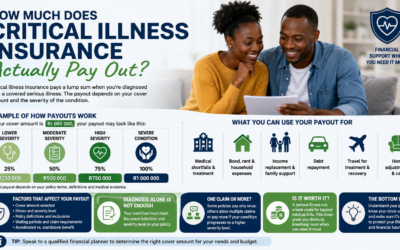
A critical illness benefit pays a lump sum if you are diagnosed with a serious illness covered by the policy, such as cancer, heart attack, stroke, kidney failure, or another major condition listed in the policy terms. This benefit is not only about medical bills. It can help with lifestyle changes, treatment-related costs, recovery time, home adjustments, reduced income, or additional family support.
Many people focus on death cover but forget that surviving a serious illness can also create major financial pressure. A critical illness payout can give you financial breathing room at a time when you may need to focus on treatment and recovery rather than worrying about money.
6. Terminal Illness Benefit
A terminal illness benefit may allow the insured person to receive part or all of the life cover payout while still alive if they are diagnosed with a terminal condition and meet the policy requirements. This can help with medical care, family support, final wishes, debt settlement, or estate planning needs.
This benefit can provide dignity and control during a very difficult stage of life. It allows the policyholder and family to make important decisions while financial support is available.
7. Education Benefit
Some life insurance policies may include an education benefit or allow cover to be structured in a way that protects children’s education. This benefit may help pay school or tertiary education costs if a parent passes away, becomes disabled, or suffers a serious illness.
Education is one of the biggest long-term responsibilities for parents. Life insurance can help ensure that children are not forced to change schools, delay university, or abandon their studies because of a family tragedy. For parents, this is one of the strongest reasons to review life cover properly.
8. Estate Planning Benefit
Life insurance can also play an important role in estate planning. When someone passes away, their estate may face costs such as executor fees, debts, taxes, legal costs, bond settlement, and other administration expenses. If there is not enough cash available, the family may be forced to sell assets to cover these costs.
A life insurance policy can provide liquidity to the estate or directly support beneficiaries, depending on how it is structured. This can help protect assets such as property, business interests, or family investments. It can also make the estate winding-up process less stressful for loved ones.
9. Beneficiary Protection
A life insurance policy allows you to nominate beneficiaries who should receive the payout after your death. This is a powerful benefit because it can help ensure that the right people receive financial support. However, beneficiary nominations should be reviewed regularly, especially after marriage, divorce, the birth of children, or major family changes.
Outdated beneficiaries can create unnecessary complications. A policy should reflect your current wishes and your current family responsibilities. Life insurance is not only about having cover; it is also about making sure the money reaches the right people at the right time.
Choosing the Right Combination of Benefits
Not everyone needs every benefit. The right combination depends on your stage of life, income, debts, family responsibilities, employer benefits, health, and long-term goals. A young single professional may need a different structure from a parent with children, a bond, and ageing parents to support. A self-employed person may need stronger income protection than someone with strong employer-provided benefits.
The key is to understand what financial risks you are trying to protect. Ask yourself: What happens if I die? What happens if I become disabled? What happens if I suffer a serious illness? What happens to my children’s education? What happens to my estate?
Final Thought
The main types of life insurance benefits include death cover, funeral benefits, disability benefits, income protection, critical illness cover, terminal illness benefits, education support, and estate planning protection. Each benefit solves a different financial problem, and together they can create a strong safety net for your family.
Life insurance should not be bought only because it is affordable or popular. It should be structured around your real responsibilities and the people who depend on you. A qualified financial planner can help you assess your needs, compare options, and build a protection plan that gives your family financial confidence when they need it most.